Carrara: Between Mountains of Marble and the Weight of Time
Marble Portal Feature – November 2025
At first light, the Apuan Alps rise sharply above the Tyrrhenian coastline, their rugged peaks reflecting in the calm waters below. Shaped over countless millennia by wind, rain, and now human ambition, these mountains bear the unmistakable marks of time and industry.
For more than two thousand years, people have carved into these slopes, extracting the white marble that made Carrara world famous. What once symbolized artistic perfection and imperial grandeur now reveals a more complex, fragile balance between natural heritage and industrial necessity.
A Landscape Transformed by Stone
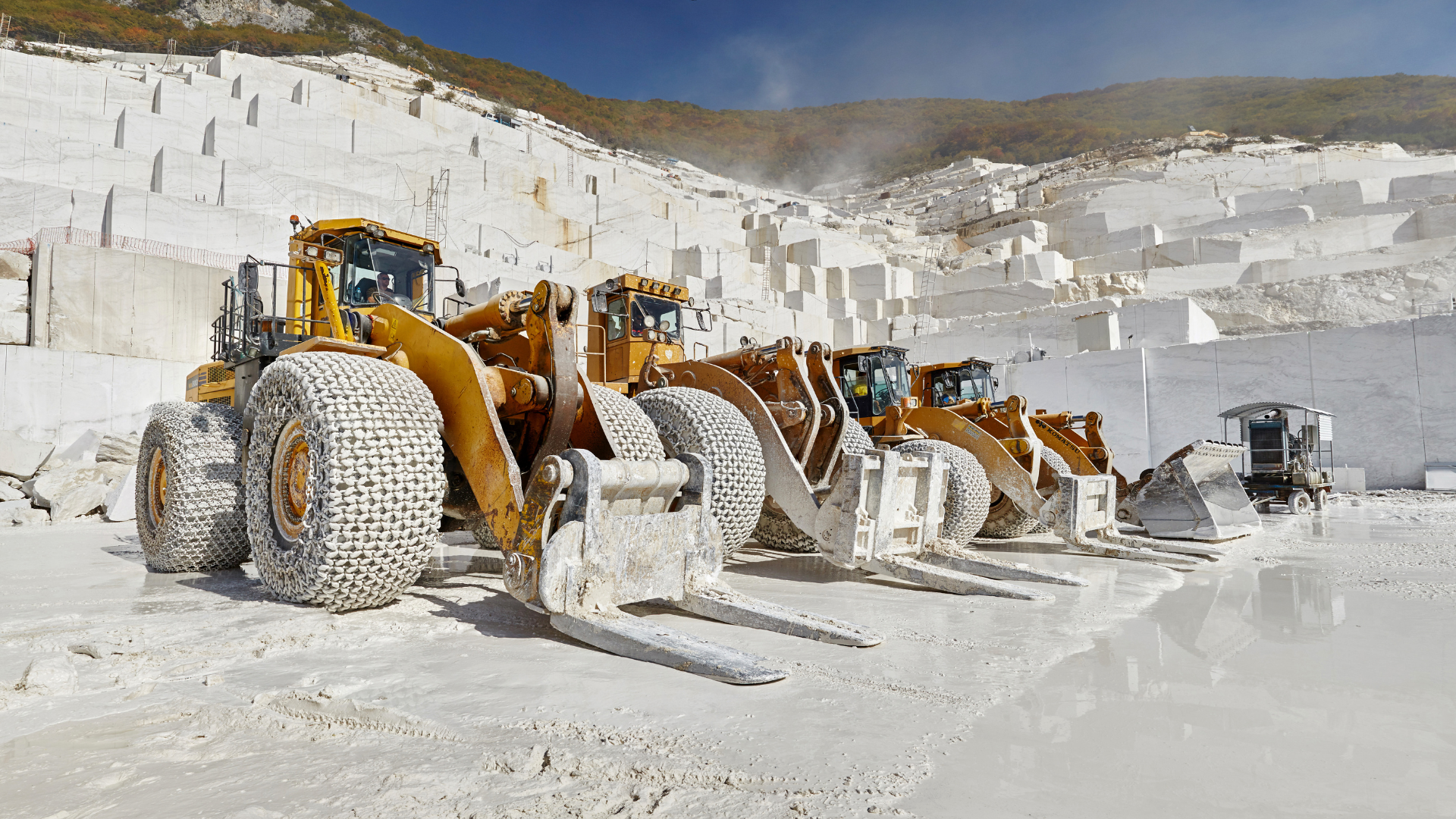
The scars across the Apuan Alps are no longer hidden. Dust-filled aquifers, continuous streams of heavy trucks, and the ever-present risk in the quarries have become part of Carrara’s daily rhythm. The last fatal accident in April serves as a stark reminder that this beauty comes at a cost.
From the foothills near Monte Sagro, environmental activists can be seen overlooking vast open pits — a scene that captures the paradox of Carrara: a land celebrated for its marble yet burdened by the extraction that sustains it.
Nestled at the base of these mountains, Carrara remains one of the world’s key marble centers, with over a hundred active quarries spread across its valleys. Since Roman times, this stone has built empires and inspired masterpieces, from ancient temples to Renaissance sculptures.
From Empire Stone to Industrial Commodity
Carrara’s history is intertwined with art and power. Roman emperors prized its purity; later, popes and princes used it to embellish cathedrals and palaces. The Renaissance brought immortal fame — Michelangelo, Bernini, Donatello — all shaping marble that once slept within these mountains.
But over the past two centuries, the process has changed beyond recognition. What was once manual craft and devotion has evolved into industrial-scale mining, driven by global demand.
Today, Carrara’s marble is a symbol of luxury architecture and modern design, featured in skyscrapers, hotels, and private villas. Yet behind the polished slabs lies a stark reality: in the last 30 years alone, more marble has been removed than in the previous 2,000 years combined.
Each year, 4 to 5 million tonnes of marble leave the region, generating roughly €130 million in revenue. From the port of Marina di Carrara, enormous blocks travel mainly to China, while finished works find their way to the United States, the UAE, and Saudi Arabia.
A City Shaped by Its Stone
The town of Carrara itself feels like a living museum — narrow alleys, pastel façades, and marble details at every turn. The Carrione stream, flowing down from the mountains, divides a historic center filled with workshops and quiet courtyards where artisans once carved the same stone seen on global monuments.
At Piazza Alberica, a marble statue of Maria Beatrice d’Este, Duchess of Massa and Carrara, still stands guard over the city. Her likeness — chiseled from local marble — commemorates the duchy’s independence and the deep ties between its rulers and the mountain quarries.
Yet beneath the elegant facades lies decline. Since the opening of the Strada dei Marmi in 2012 — a six-kilometer bypass designed to reroute quarry trucks — the air has cleared, but the streets have grown quieter. Many of the bakeries, shops, and workshops that once thrived on the marble economy have closed.
Carrara’s population has fallen below 60,000, its lowest since World War II. Automation now handles much of the quarry work once done by hand, leaving fewer jobs and an aging community behind.
The Changing Face of the Quarry
The mythic image of the “marble men” — fearless quarry workers defying cliffs with hammer and wedge — has largely vanished. Less than one percent of Carrara’s marble now goes toward sculpture. Most is destined for large-scale architectural projects or crushed into industrial aggregates.
What was once a symbol of art and struggle has become part of a global supply chain — efficient, profitable, but detached from its cultural roots.
And yet, Carrara still commands awe. The same mountains that gave us the David and the Pietà remain both wounded and magnificent. Between progress and preservation, Carrara stands as a mirror of our age — a place where the weight of history and the demands of modernity meet, and where every polished surface hides the mark of time.